

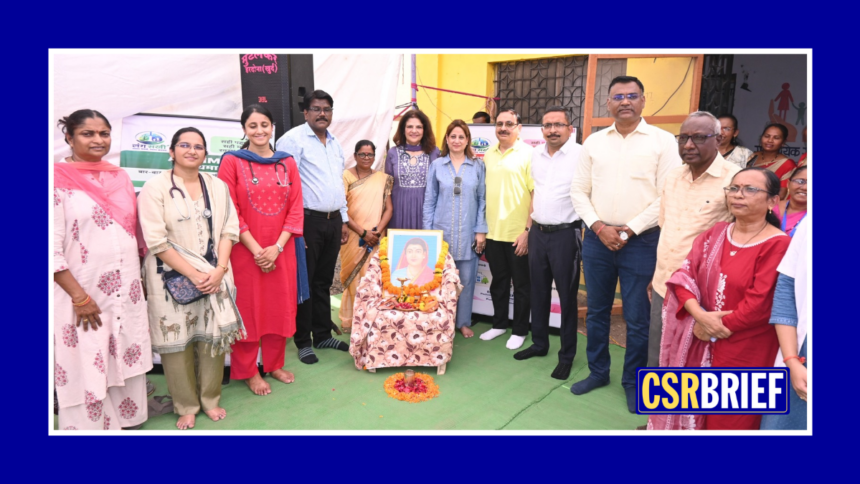
Ambuja Foundation and Punya Kaarya Foundation have launched an Action Research Project to prevent and manage lung-health disorders among children in the Korpana, Rajura and Jiwati blocks of Chandrapur, Maharashtra.
- Project builds on a 70-village community network
- Training will support early identification and referral
- Lung Sakhi app enables community screening
- Community clinics will provide essential medicines
- Partners focus on bringing care closer to rural communities
- Partners plan to explore expansion in Punjab
- CSRBrief View: Why this matters — Rural respiratory care needs an accessible first point of contact
The project will focus on awareness, prevention, early identification, referrals, treatment and long-term management of respiratory diseases.
Project builds on a 70-village community network
Ambuja Foundation works in 70 villages across the three blocks, reaching approximately 40,000 people from underserved communities, including Scheduled Tribe populations.
The partners aim to develop a community-based model covering chronic lung diseases, asthma, allergies and tuberculosis. The programme will build local capacity to identify symptoms, screen children and connect them with treatment.
Training will support early identification and referral
Specialists and programme teams from the two foundations will develop training manuals and educational curricula for Sakhis and frontline health workers.
Training will cover respiratory risk factors, early symptoms, screening, preventive measures and timely treatment.
A paediatric pulmonologist will provide technical guidance, clinical support and training. Standardised protocols, referral pathways and standard operating procedures will also be developed for respiratory healthcare delivery in rural settings.
Lung Sakhi app enables community screening
The project includes Lung Sakhi, a digital application designed to help trained community health workers screen children for potential lung-health problems and facilitate referrals.
Sakhis will be trained to use the application and conduct spirometry, providing an objective assessment of children identified through community screening.
Community clinics will provide essential medicines
The model will seek to provide essential medicines, including appropriate inhaled medications, through community clinics.
Trained paramedical personnel will regularly monitor the availability of medicines.
Families will also receive respiratory-health education and information on practical measures that can be followed at home. Appropriate pulmonary rehabilitation strategies will be introduced where indicated.
Partners focus on bringing care closer to rural communities
Chandrakant Kumbhani, CEO, Ambuja Foundation, said the project would create awareness about children’s lung health and emphasise the role of early identification and appropriate treatment.
“Through this project in Chandrapur, we want to create awareness among people about the importance of lung health in children and emphasise that early identification and appropriate treatment can significantly improve outcomes,” Kumbhani said.
Dr Indu Khosla, Paediatric Pulmonologist and Founder Director, Punya Kaarya Foundation, said children’s developing lungs can be affected by early-life exposure to air pollution and other environmental risks.
“Poor lung health during childhood can have consequences that extend well into adult life, including impaired lung growth and an increased risk of chronic respiratory disease,” Khosla said.
Sunil Dhawan, Director, Punya Kaarya Foundation, and CEO, SSF Plastics India Ltd., expressed support for the project and committed to supporting it through the foundation.
Partners plan to explore expansion in Punjab
Following the Chandrapur initiative, the partners plan to explore extending the Lung Sakhi project to Ropar and Chandigarh in Punjab.
Their stated long-term objective is to develop a replicable community-based model combining technology, trained health workers, spirometry, specialist expertise, teleconsultation and continued follow-up.
CSRBrief View: Why this matters — Rural respiratory care needs an accessible first point of contact
The project brings screening, trained community workers, referral pathways and medicine access into one local model. Its longer-term value will depend on how many children are screened, referred and treated, and whether their health outcomes are tracked over time.